



Originally published in The Gleaner on 7 October 2026 as “When your competitive advantage walks out.”
For years, we have been taught that the true value of a company lies in its brand and in its balance sheet. Yet the more I work with organisations undergoing transformation, the more I know that it is still not the whole story. Brand value is not wrong. Brand value is incomplete. As corporations spend billions chasing growth, protecting margins and satisfying shareholders, they may be overlooking the asset that matters most, the one that walks out the door every evening.
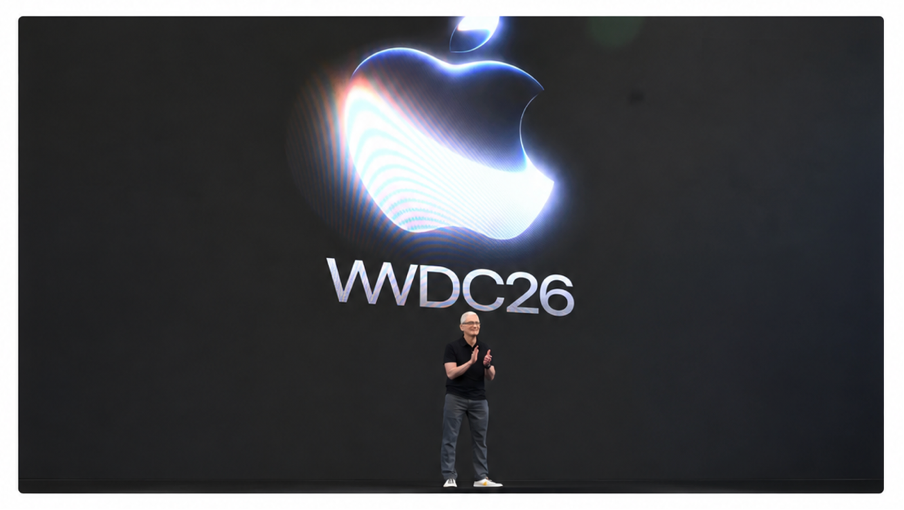
Apple recently accused OpenAI of misappropriating trade secrets through former employees involved in hardware development. OpenAI has denied the allegations. The lawsuit raises far more important strategic questions for business leaders everywhere. Where does competitive advantage actually live? That answer is becoming far less clear.
For most of the last century, the answer seemed straightforward. Competitive advantage lay in brands, factories, equipment, patents, distribution networks and capital—some reflected on the balance sheet, others valuable beyond it.In the industrial era, competitive advantage sat in factories. In the digital era, it sat in software. In the platform era, it increasingly sits inside people’s heads.
And that presents a problem.
Unlike factories, people can leave. Unlike patents, they can take their experience with them. Unlike equipment, they cannot simply be locked inside a warehouse. Companies today are slowly realising that they are increasingly dependent on assets they do not fully own.
Organisations spend millions creating environments where knowledge is generated collectively. At what point does individual experience become organisational knowledge? And at what point does organisational knowledge become a competitive asset worth protecting? That question sits at the centre of an increasingly important business challenge.
It is the Cinderella asset that rarely appears on a balance sheet and is too often absent from strategic discussions altogether: institutional memory. The collective experience, judgement, relationships, insights and lessons accumulated over years of operating, failing, adapting and succeeding. Unlike a brand, institutional memory cannot easily be valued. Unlike a patent, it cannot easily be registered. Unlike equipment, it cannot easily be insured. Yet this is the very asset upon which all the others depend.
Many financial institutions have spent decades trying to manage this risk through operational ring-fencing and segregation of duties. They deliberately limit how much any one employee can control from end-to-end. Yet even the most sophisticated controls cannot eliminate a simple reality: someone still needs to understand how all the pieces fit together.
I have seen this challenge emerge repeatedly as I lead organisational transformations and change initiatives across industries. Organisations often know who their critical people are, yet surprisingly few have a deliberate strategy for capturing what those individuals know before that knowledge becomes a single point of failure.
The Apple lawsuit serves as a jolt that talent mobility exists at every level of the market. Apple remains one of the world’s most admired and valuable companies. Yet even Apple cannot prevent people from leaving.
That reality forces a more important question. If people will eventually leave, what remains behind?
That is why Silicon Valley has become ground zero for the modern talent war. Apple, OpenAI, Google, Meta, Anthropic and Nvidia are competing as aggressively for talent as they are for customers. In today’s economy, knowledge is often the product.
In many cases, the most valuable intellectual property is not sitting in a server. It is sitting in a meeting.
Years ago, while pursuing doctoral studies, I had the opportunity to share a classroom with a member of Apple’s C-suite leadership team. As we worked through product development, customer experience and organisational alignment, one thing became clear. Apple’s advantage was never simply its devices. It was the discipline of thinking behind them. The systems. The frameworks. The accumulated organisational know-how developed over decades.
Apple’s lawsuit argues that OpenAI’s hardware ambitions were built on knowledge that did not belong to it. Whether that claim proves true is a matter for the courts. The larger question for business leaders is more uncomfortable. How much of an organisation’s competitive advantage resides in assets it does not truly control?
Founders understand this challenge particularly well. They are often both an organisation’s greatest strength and its greatest vulnerability. They hold relationships, the context and the judgement built over years of navigating uncertainty. Yet when too much knowledge resides in one person, that same strength becomes a strategic risk that no contract, policy or non-compete agreement can fully mitigate.
Lenders and investors often require key person insurance because they recognise that the sudden loss of a founder or critical executive can materially impact enterprise value. Even when that protection exists, it addresses only part of the problem. Insurance can replace money. It cannot replace institutional memory.
Yet most organisations struggle to measure it and even fewer know how to protect it. Perhaps that is because we tend to protect what we can measure, and perhaps what we can see. Factories can be insured. Equipment can be replaced. Buildings can be rebuilt. Even brands can be valued. Accumulated expertise is different, it shapes decisions, guides innovation, preserves culture and often determines whether strategy succeeds or fails.
Most organisations have a disaster recovery plan for their servers. Far fewer have one for the person who knows how everything actually works.
Bring this question into the next leadership meeting: if a critical person left tomorrow, what would the company struggle to do?
What essential knowledge sits with that person?
Who else can use it—not merely access the files?
What should the company capture, share or practise now?
Choose one dependency and assign an action, an owner and a review date.
Organisations regardless of size need to understand the value sitting inside their teams, and deliberately create systems to capture it, strengthen it and preserve it. Because the most valuable asset in the business does not sit on the balance sheet. It walks out the door every evening. And Apple’s lawsuit reminds us that no organisation, regardless of its size, prestige or resources, is exempt from that reality.
-End-
=============================
ABOUT
Dr. Charlene Ashley is an international business strategist, organisational behaviour consultant, and marketing strategist. She advises organisations on growth, transformation, leadership, and market competitiveness, bringing an international perspective to business decisions affecting USA and international markets. Charlene contributes to and has been quoted in a number of media houses inclusive of The Gleaner Company, Forbes and OUR.